
Mojave Rattlesnake vs. Red Diamond Rattlesnake
They meet on the desert edge of Riverside and San Diego counties; their records touch there. Both have black and white tail rings. A: Greenish-grey, olive or brown, with dark diamonds in the Mojave Rattlesnake; tan, pink or brick-red, with reddish diamonds in the Red Diamond Rattlesnake. B: The white rings clearly wider than the black in the Mojave Rattlesnake; black and white rings of about equal width in the Red Diamond Rattlesnake. Both are venomous: leave them alone.
Open this comparison in Wildsight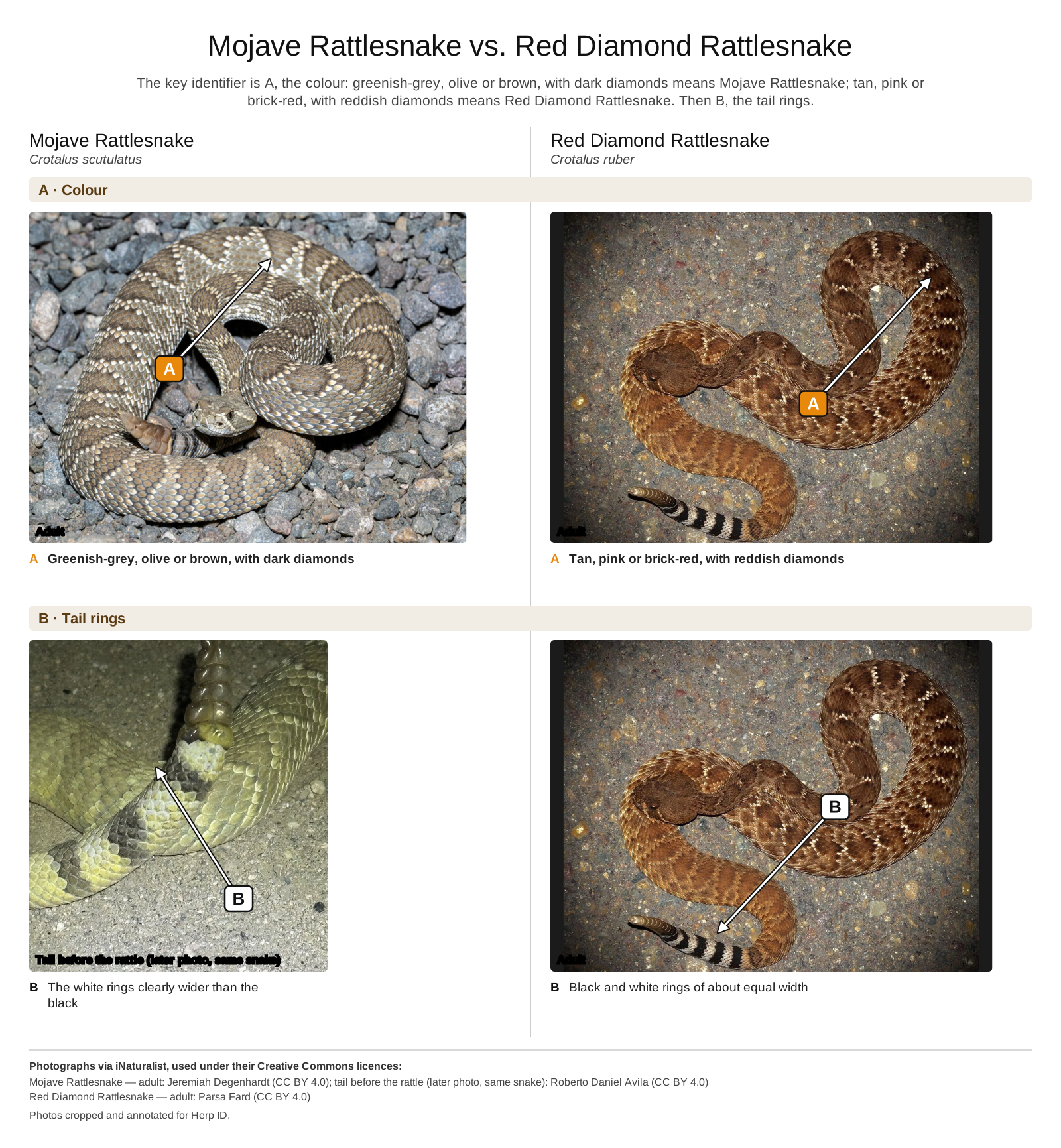
Photographs via iNaturalist under Creative Commons licences; the photographers are credited on the sheet.
More comparisons
- Mojave Rattlesnake vs. Western Rattlesnake
- Mojave Rattlesnake vs. Sidewinder
- Mojave Rattlesnake vs. Southwestern Speckled Rattlesnake
- Western Diamond-backed Rattlesnake vs. Mojave Rattlesnake
- Panamint Rattlesnake vs. Mojave Rattlesnake
- Western Black-tailed Rattlesnake vs. Mojave Rattlesnake
- Tiger Rattlesnake vs. Mojave Rattlesnake
- Arizona Black Rattlesnake vs. Mojave Rattlesnake
- Mojave Rattlesnake vs. Sonoran Lyre Snake
- Rock Rattlesnake vs. Mojave Rattlesnake
- Prairie Rattlesnake vs. Mojave Rattlesnake
- Ridge-nosed Rattlesnake vs. Mojave Rattlesnake
- Twin-spotted Rattlesnake vs. Mojave Rattlesnake
- Eastern Black-tailed Rattlesnake vs. Mojave Rattlesnake
- Red Diamond Rattlesnake vs. Southwestern Speckled Rattlesnake
- Red Diamond Rattlesnake vs. Western Rattlesnake
- Western Diamond-backed Rattlesnake vs. Red Diamond Rattlesnake
- California Lyresnake vs. Red Diamond Rattlesnake
Wildsight identifies the reptiles and amphibians of the United States. Every comparison