
Western Grotto Salamander vs. Dark-sided Salamander
Nearly every Kansas Grotto Salamander found is a gilled larva in a cave stream or spring run, where Dark-sided Salamander larvae also live (records share 6 one-degree squares). A: Tan, only faintly stippled or mottled in the Western Grotto Salamander; yellowish with distinct dark spots down the back in the Dark-sided Salamander. B: Tiny eyes, the lids partly grown shut in the Western Grotto Salamander; big, bulging, working eyes in the Dark-sided Salamander. C: Pale pinkish-white to brownish, no pattern in the Western Grotto Salamander; yellow to orange with dark spots and dark sides in the Dark-sided Salamander. In Kansas only a few springs and caves in far southeastern Cherokee County; endangered. Look, photograph and leave it in the water.
Open this comparison in Wildsight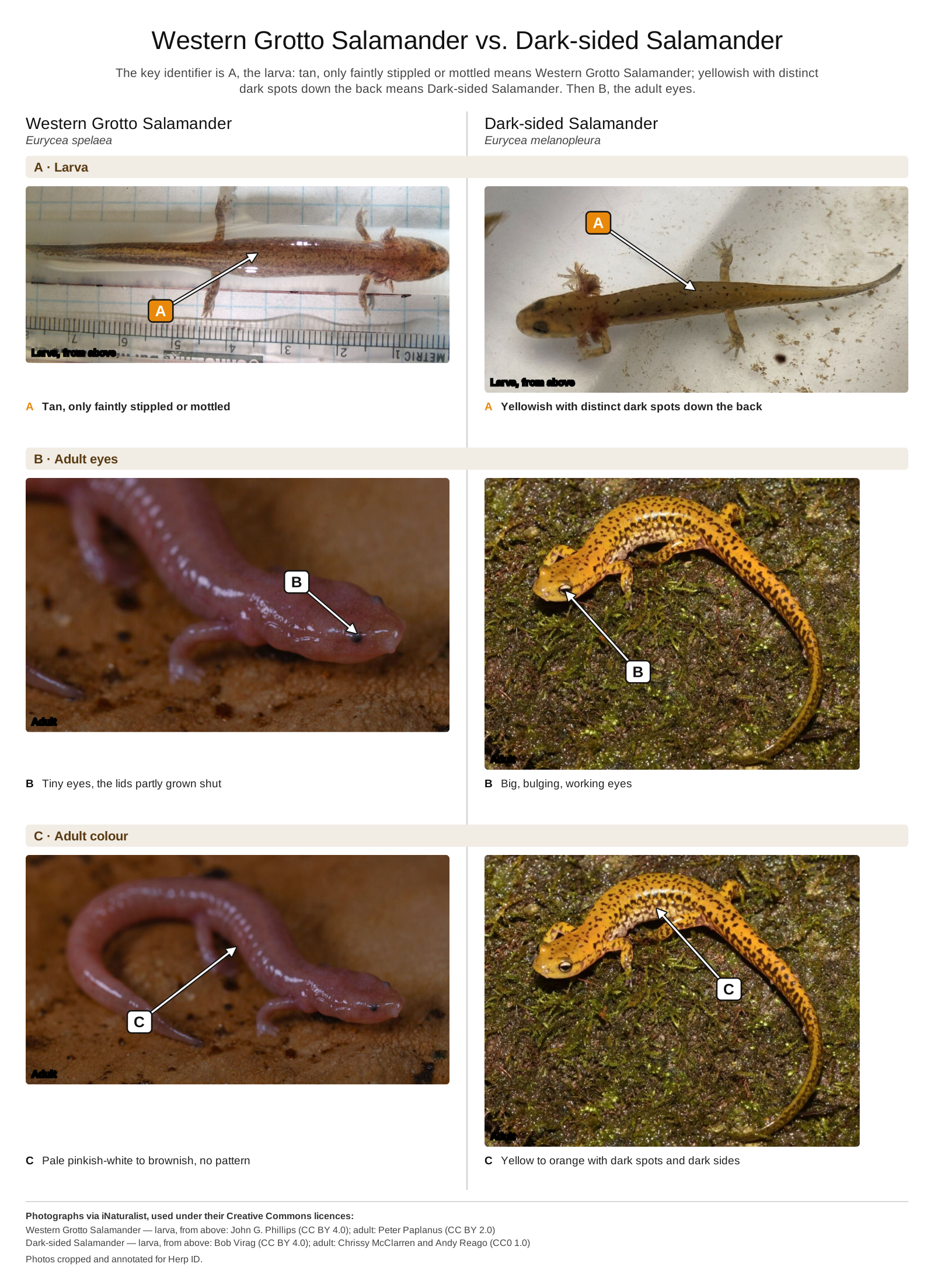
Photographs via iNaturalist under Creative Commons licences; the photographers are credited on the sheet.
More comparisons
- Oklahoma Salamander vs. Western Grotto Salamander
- Dark-sided Salamander vs. Long-tailed Salamander
- Dark-sided Salamander vs. Cave Salamander
- Ozark Zigzag Salamander vs. Dark-sided Salamander
- Northern Grotto Salamander vs. Dark-sided Salamander
- Southern Grotto Salamander vs. Dark-sided Salamander
Wildsight identifies the reptiles and amphibians of the United States. Every comparison