
Cuban Treefrog vs. Squirrel Treefrog
Squirrel Treefrogs share the same yards and gardens (a record within 10 km of 62 of 64 Louisiana Cuban records) and change from green to brown like young Cubans. A: Huge toe pads, about as big as the eardrum in the Cuban Treefrog; small toe pads in the Squirrel Treefrog. B: Warty in the Cuban Treefrog; smooth, often with small dark spots in the Squirrel Treefrog. C: Young: smooth, pale green to tan, with a broad cream stripe along each side and often red eyes in the Cuban Treefrog; no sharp cream side stripe; the eye gold or brown in the Squirrel Treefrog. D: Big: adults 1.5 to 5 in in the Cuban Treefrog; small: 0.9 to 1.6 in in the Squirrel Treefrog. Introduced: report Cuban Treefrogs to the state wildlife agency and never move one.
Open this comparison in Wildsight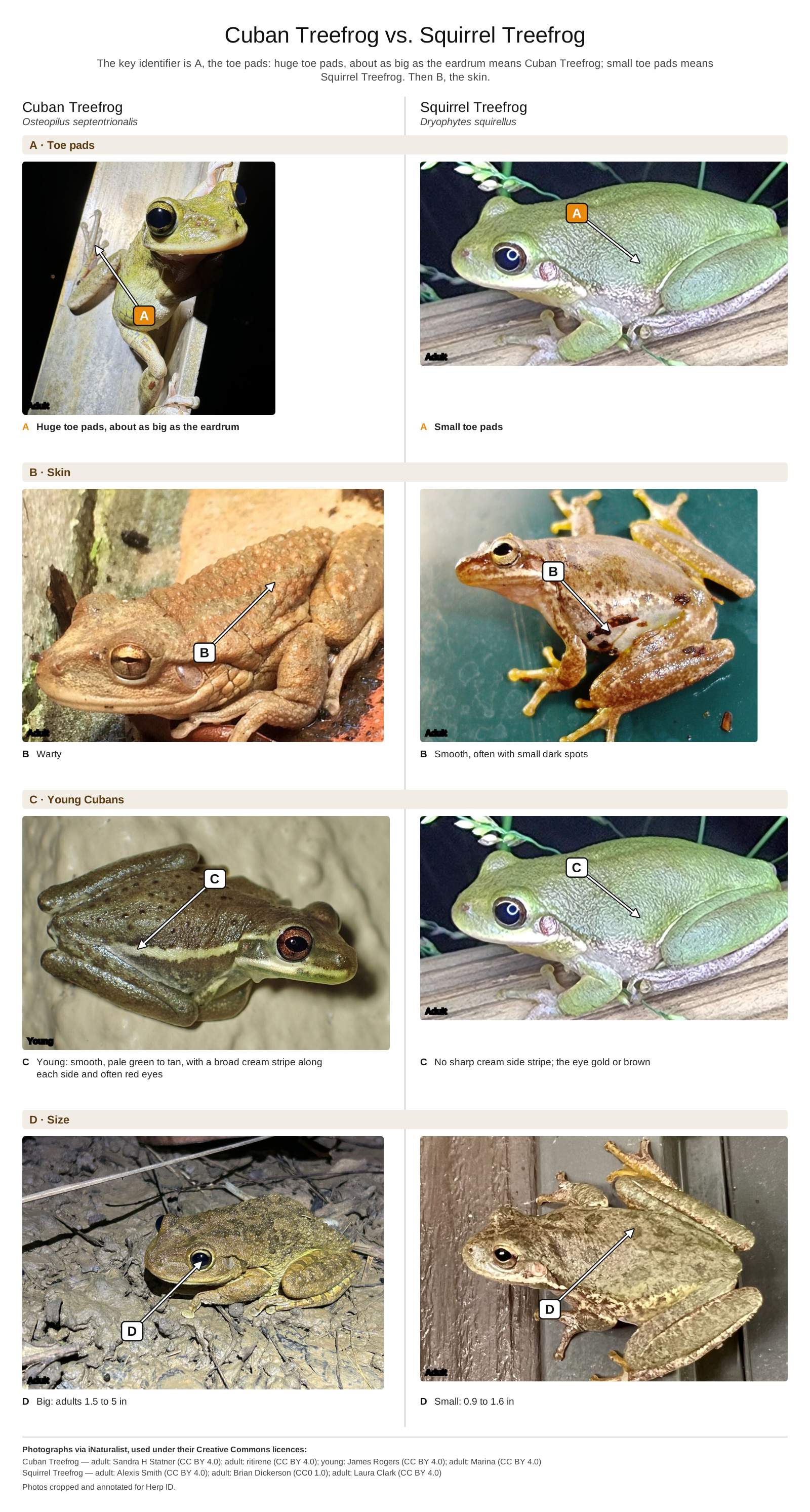
Photographs via iNaturalist under Creative Commons licences; the photographers are credited on the sheet.
More comparisons
- Cuban Treefrog vs. Green Treefrog
- Cuban Treefrog vs. Cope's Gray Tree Frog
- Cuban Treefrog vs. Barking Treefrog
- Cuban Treefrog vs. Pine Woods Treefrog
- Cuban Treefrog vs. Bird-voiced Treefrog
- Squirrel Treefrog vs. Green Treefrog
- Squirrel Treefrog vs. Cope's Gray Tree Frog
- Squirrel Treefrog vs. Gray Treefrog
- Squirrel Treefrog vs. Bird-voiced Treefrog
- Mexican Treefrog vs. Squirrel Treefrog
- Barking Treefrog vs. Squirrel Treefrog
- Pine Woods Treefrog vs. Squirrel Treefrog
Wildsight identifies the reptiles and amphibians of the United States. Every comparison