
Northern Cottonmouth vs. Common Watersnake
Both are heavy dark snakes of southern Illinois water. Look at the head from the side: the Cottonmouth has a broad, blocky head much wider than its neck (a watersnake's head is narrow), a dark band running through the eye, edged above by a pale line, a vertical pupil and a pit between the eye and the nostril; the Common Watersnake has a plain-sided head, a round pupil and no pit. A Cottonmouth swims with its body on top of the water and, when cornered, gapes to show the white lining of its mouth. Old Cottonmouths turn nearly plain; Common Watersnakes keep their bands and blotches for life.
Open this comparison in Wildsight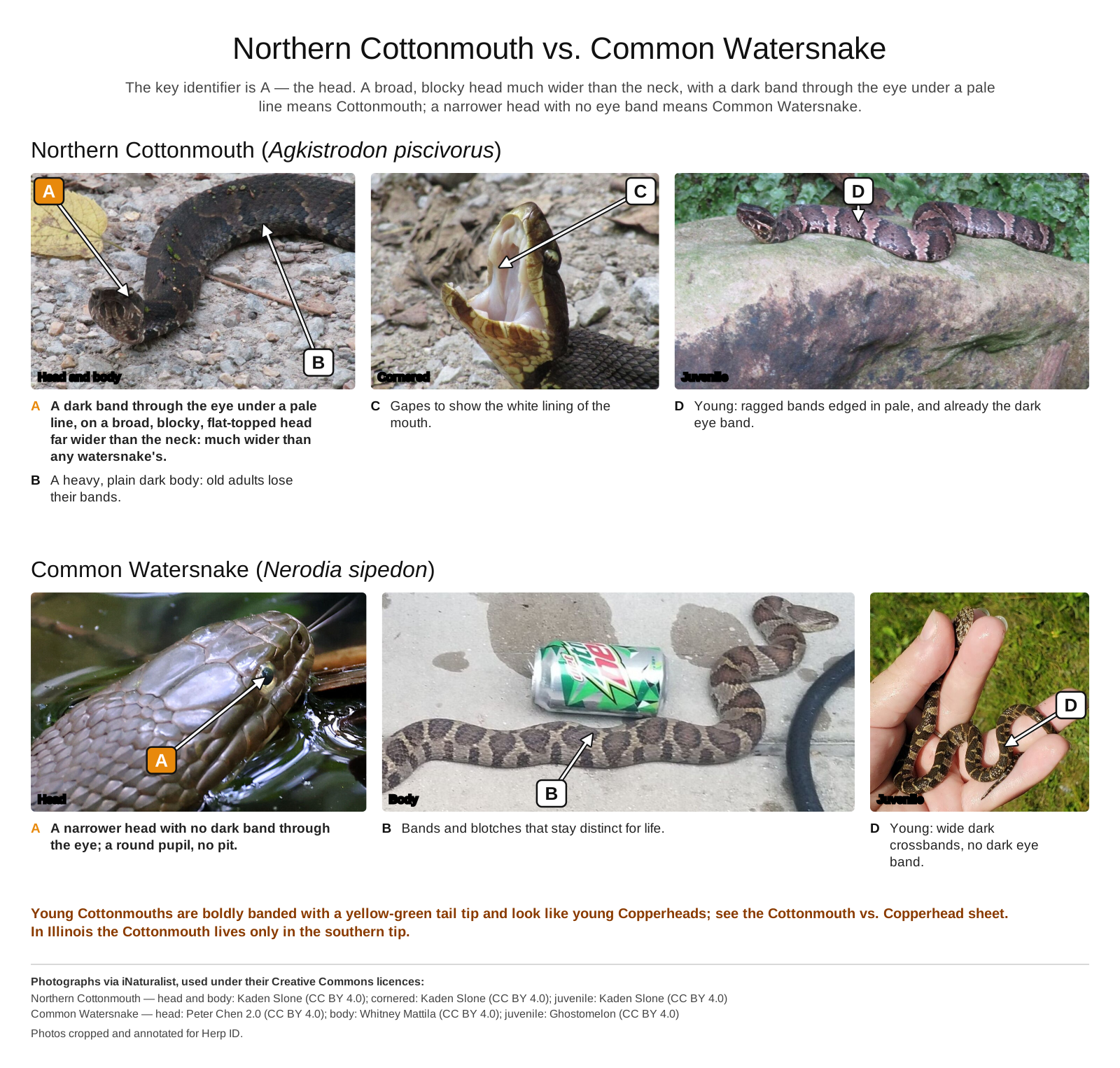
Photographs via iNaturalist under Creative Commons licences; the photographers are credited on the sheet.
More comparisons
- Northern Cottonmouth vs. Plain-bellied Watersnake
- Northern Cottonmouth vs. Diamondback Watersnake
- Northern Cottonmouth vs. Mississippi Green Watersnake
- Northern Cottonmouth vs. Eastern Copperhead
- Banded Watersnake vs. Northern Cottonmouth
- Broad-banded Copperhead vs. Northern Cottonmouth
- Brown Watersnake vs. Northern Cottonmouth
- Florida Cottonmouth vs. Northern Cottonmouth
- Florida Green Watersnake vs. Northern Cottonmouth
- Eastern Copperhead vs. Common Watersnake
- Common Watersnake vs. Diamondback Watersnake
- Common Watersnake vs. Plain-bellied Watersnake
- Kirtland's Snake vs. Common Watersnake
- Queensnake vs. Common Watersnake
- Mississippi Green Watersnake vs. Common Watersnake
- Graham's Crawfish Snake vs. Common Watersnake
- Banded Watersnake vs. Common Watersnake
- Broad-banded Copperhead vs. Common Watersnake
- Glossy Swampsnake vs. Common Watersnake
- Brown Watersnake vs. Common Watersnake
Wildsight identifies the reptiles and amphibians of the United States. Every comparison